SEO
SEO Copywriting Guide for Search Intent and AI Discovery
In the 2026 market, where content competes across channels and AI distribution is widespread, SEO copywriting has decisively moved beyond the old crude approach of keyword stuffing, padding word counts, and filling templates. As Google’s Helpful Content System continues to evolve, E-E-A-T authority assessments take full effect, and GEO generative engines become a primary information gateway, much traditional SEO copy faces collapsing rankings, stalled indexing, and lost traffic. Many creators still cling to outdated practices: inserting keywords mechanically, extending articles indiscriminately, and recycling generic templates. The resulting repetitive, low-value filler adds little information, fails to win rankings, and can lower the entire site’s authority and ranking strength.
The essence of SEO copywriting has evolved from “pleasing search engine crawlers” into a refined content creation system that prioritizes user needs, accommodates AI extraction, aligns with Google’s authority assessments, and supports conversions . “SEO Copywriting Tips To Rank” therefore means more than formatting techniques or keyword placement. It is an end-to-end ranking growth methodology covering topic selection, structure, prose, semantics, compliance, experience, and iteration. In 2026, SEO ranking competition concerns copy quality, additional information, user relevance, and AI compatibility rather than content quantity and word count.
Authoritative SEO industry research shows strong commonalities among content on Google’s first results page in 2026: 100% alignment with content needs, comprehensive semantic coverage, standardized structure, no redundant filler, distinctive additional information, sufficient E-E-A-T signals, and strong user behavior data. Meanwhile, more than 68% of AI question-and-answer and intelligent summary traffic goes only to high-quality original SEO copy with clear structure, complete logic, and precise wording; traditional template-based, keyword-stuffed content has essentially lost eligibility for AI distribution. For overseas blogs, cross-border company websites, independent B2B sites, and individual creators expanding abroad, mastering modern SEO copywriting is central to acquiring stable free traffic inexpensively, overcoming intense competition, capturing incremental AI traffic, and monetizing lasting rankings.
Drawing on the latest 2026 Google algorithm rules, GEO distribution logic, common traits of first-page content, and extensive practical cases, this article explains actionable SEO copywriting techniques for high rankings. It builds a standardized creation system from scratch, covering topic and keyword strategy, article structure, semantic optimization, writing logic, user experience, E-E-A-T signals, AI compatibility, common mistakes, and subsequent reviews. It helps creators escape ineffective writing and consistently produce highly indexed, highly ranked, high-traffic, high-converting SEO content for every 2026 search and AI distribution scenario.
1. 2026 SEO copywriting: fundamentally rethinking rankings
To write SEO copy that ranks consistently, first abandon pre-2023 optimization thinking and understand the underlying logic after the 2026 algorithm changes. Search and AI engine assessment standards have been comprehensively upgraded. Ranking rules now revolve around four principles: user value, authenticity, additional information, and machine readability. Copy optimization that violates these principles directly triggers ranking reductions, traffic restrictions, or exclusion from indexing.
First, ranking has moved from “keyword matching” to “complete semantic intent matching.” Early Google algorithms recognized only surface information such as keyword density, title alignment, and relevance; inserting target keywords and controlling length could secure basic rankings. In 2026, intelligent algorithms deeply analyze underlying search intent, distinguishing explicit questions from latent needs, general from commercial queries, and informational from decision-making needs. SEO writing must extend beyond core keywords to cover related questions, potential concerns, and contextual needs, achieving precise alignment across keywords, semantics, scenarios, and needs as the foundation for first-page rankings.
Second, assessment has moved from “content length” to “additional information and completeness.” The industry previously assumed longer content inherently had greater ranking strength. In 2026, algorithms precisely detect redundancy, repetition, and padding. Long articles that inflate word counts, copy generic knowledge, or add nothing distinctive are classified as low quality and receive reduced ranking weight. High-ranking copy instead covers needs fully, avoids useless repetition, and provides unique value. Length should suit the context rather than be deliberately extended.
Third, traffic has moved from “search engines alone” to “search plus AI distribution.” Alongside traditional Google Search, users increasingly obtain information through ChatGPT, Gemini, AI search assistants, and other generative engines. AI engines do not index disorganized, obscure, fragmented content; they cite high-quality copy with clear reasoning, explicit positions, structured formatting, and detailed data. Good SEO copy in 2026 must serve both channels : meeting search ranking rules while supporting AI extraction, integration, and citation to capture incremental traffic.
Fourth, ranking strength has moved from “backlink quantity” to “E-E-A-T authority signals.” Backlinks remain a supporting factor but are no longer the central measure. Google now places exceptional emphasis on experience, expertise, authoritativeness, and trustworthiness. Data sources, supporting cases, author credentials, industry experience, and real situations directly affect ranking stability. Unsupported theoretical copy without experience or authoritative backing struggles with medium- and high-competition keywords even when its structure and keyword alignment are perfect.
The ultimate logic of SEO copywriting in 2026 is therefore: center content on search intent, ground it in additional information, present it through structured formatting, support it with E-E-A-T authority, and extend its reach through AI compatibility to create highly relevant, valuable, credible, readable content . These are the shared foundations of high-ranking copy.
2. Preparation: topics and keywords establish the ranking foundation
The competitiveness of quality SEO copy is determined before writing starts. Poor rankings often result from misguided topics, incorrect keyword targeting, and mismatched needs rather than weak writing skills. Chasing popular terms, overusing difficult head keywords, and overlooking precise long-tail terms create excessive competition and poor relevance, ultimately producing little useful traffic. In 2026, follow a standardized sequence: select keywords, establish intent, map scenarios, build an outline, and only then write.
2.1 Tiered keyword selection: match site authority rather than chasing difficult terms
Sites differ in authority and ranking strength, so suitable keyword difficulty varies substantially. New or low-authority sites struggle with highly competitive head terms regardless of copy quality; established, authoritative sites waste their strengths by targeting only easy long-tail terms. The optimal 2026 strategy uses three tiers matched to the site’s current position.
New sites and beginners (authority 0–1): focus on precise long-tail, question, and narrowly contextual keywords. These have moderate search volume, very low competition, and clear intent, making indexing and ranking easier and helping establish initial authority and traffic. Typically they contain more than 4 words and specific scenarios, questions, or conditions, such as “how to clean stainless steel fridge without streaks.”
Growing sites (authority 2–3): focus on moderately competitive practical, tutorial, comparison, and buying keywords. These combine commercial value and traffic scale with manageable difficulty. High-quality structured copy can consistently secure first-page rankings, expand traffic, and generate leads; examples include “best wireless earbuds for workout” and “how to improve blog SEO ranking.”
Established authoritative sites (authority 4+): target competitive head terms, industry guides, trend analysis, and reference topics. These offer substantial traffic and commercial value but require in-depth articles, authoritative backing, and a complete content ecosystem. Only high-authority sites can consistently secure these rankings and dominate traffic.
2.2 Identify intent precisely: make copy match user needs 100%
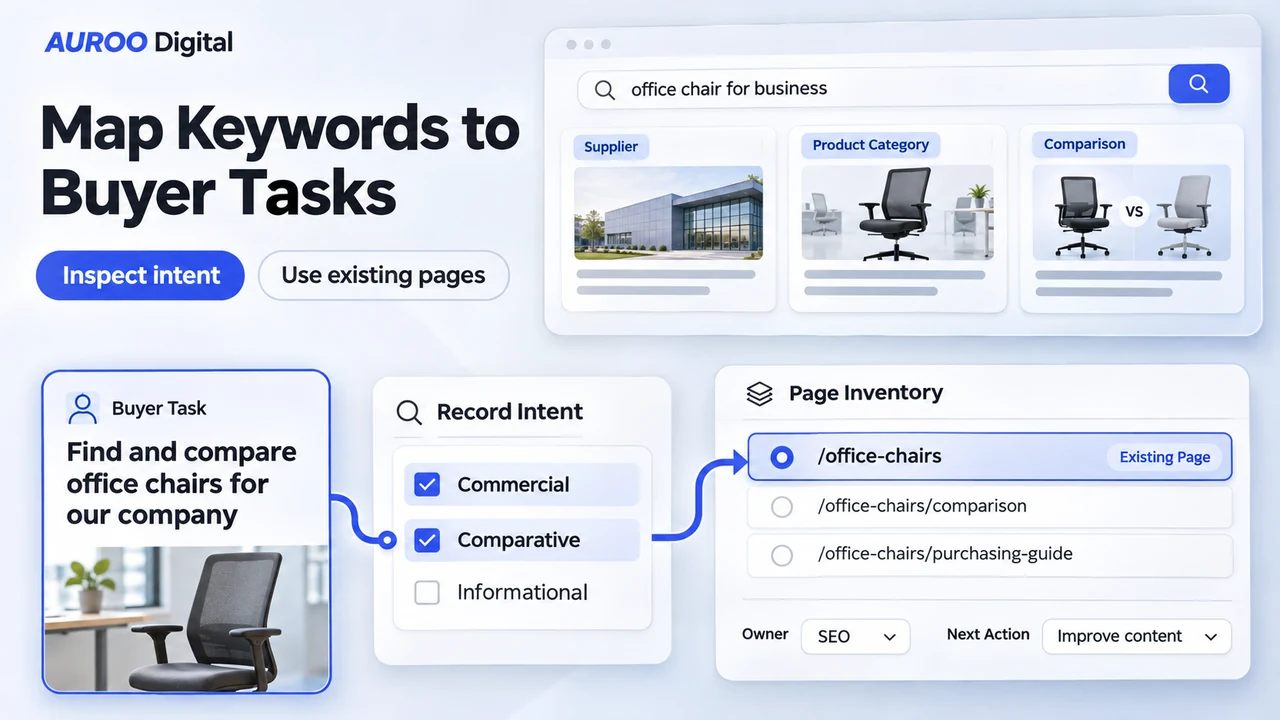
Keywords are not inherently better or worse; they either match intent or do not. In 2026, algorithms have zero tolerance for mismatched intent. Answering a simple question with an in-depth review, or a tutorial query with general news, leads to poor rankings regardless of writing quality. Creators must distinguish four core intents and tailor their writing accordingly.
Informational questions: users want quick answers and resolution of basic doubts, emphasizing clarity, precision, and efficiency. Write direct answers, clear definitions, and concise points without excessive expansion or deep theory. Keep length appropriate so redundant content does not cause exits.
Practical tutorials: users want to execute a task or learn a method, requiring complete steps, detailed techniques, precautions, and mistakes to avoid. Prioritize actionable, sequential detail throughout, making the method implementable and repeatable rather than offering vague theory.
Comparison and decisions: users need selection, comparison, and decision support through strengths and weaknesses, comparison dimensions, suitable scenarios, and risk warnings. Be objective, comprehensive, and multidimensional, resolving concerns and providing clear selection grounds.
Commercial conversions: users want to understand products, obtain services, or purchase, requiring selling points, comparative strengths, price references, and after-sales assurances. Combine useful explanation with natural conversion guidance rather than making the copy feel like a hard sell.
2.3 Keyword planning: combine core, long-tail, and semantic terms effectively
SEO copy in 2026 abandons repetition of one keyword in favor of a multidimensional combination of core terms, long-tail terms, semantically related terms, and question keywords. This matches semantic recognition and greatly expands traffic coverage. The rules are straightforward: use the core keyword only in key positions such as the title, opening, and conclusion, naturally appearing 1–2 times without dense repetition; place long-tail terms in subheadings and body paragraphs for particular scenarios; weave related terms naturally throughout to broaden coverage and completeness; and use question keywords in FAQs for related searches. Keep all placement natural and avoid forced repetition, prioritizing fluent meaning over density.
3. 2026 A standardized structure for high-ranking SEO copy: a framework for algorithms and AI
Structure is the skeleton of SEO copy and the first major dimension crawlers and AI engines use to recognize value. Disorganized writing with unclear hierarchy cannot earn strong rankings and citations even when its information is excellent. Reviews of extensive first-page content in 2026 yield a standardized framework suitable for over 90% of blog posts, news, tutorials, reviews, and guides. Reuse it directly to improve indexing and ranking strength consistently.
3.1 Titles: writing SEO headlines with high click-through rates
Titles are the first gateway to rankings and clicks. In 2026, quality titles must satisfy four standards: keyword alignment, precise intent, sufficient appeal, and compliant brevity. Put the core keyword first to align with priority crawling and improve matching. Identify content type—guide, tutorial, tips, review, comparison, or analysis—so users immediately recognize value. Add restrained appealing language addressing user pain points to improve organic click-through. Control length carefully for Google’s display rules to avoid truncation and lost information.
A reusable title template is core keyword + content type + added value, for example “SEO Copywriting Tips To Rank in 2026: Practical Guide for Beginners.” It is concise, precise, explicit about keywords and value, and serves both algorithms and users. Avoid clickbait, exaggeration, keyword stuffing, and ambiguity that can trigger algorithmic compliance penalties.
3.2 Introduction: establish relevance and retain readers quickly
The opening is central to relevance assessment, the user’s decision to keep reading, and AI summary extraction. It must do three things: match the core keyword precisely, state the article’s main value in one sentence, and briefly outline its main dimensions. Address search needs immediately without irrelevant setup or empty language, deliver value quickly, reduce exits, and help crawlers identify the subject and prioritize indexing.
Use a clear sequence: introduce the pain point or search need, include the core keyword, summarize the article, and explain the reader’s benefit. This matches algorithmic semantics and communicates overall value quickly, encouraging reading and improving behavior data from the outset to support rankings.
3.3 Body hierarchy: standardized H1–H2–H3 organization
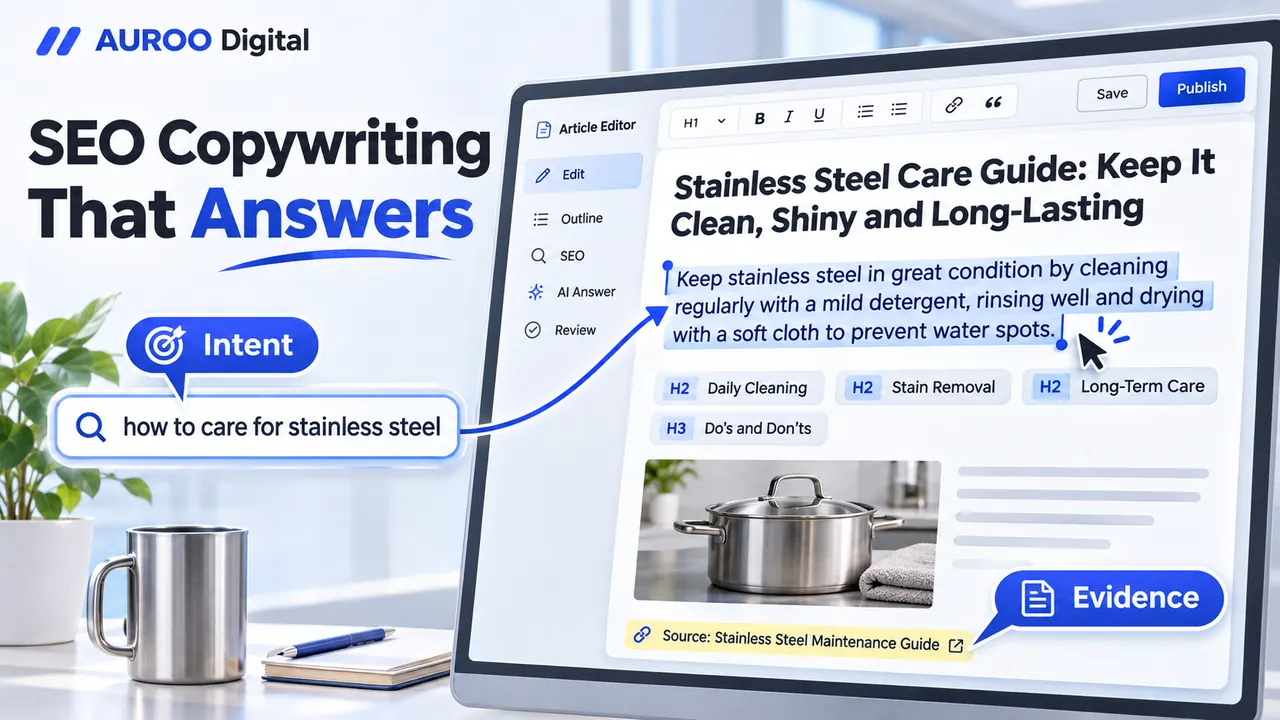
A clear heading hierarchy is central to AI distribution and structural scoring in 2026. Keep one H1—the article title—to avoid confusion. Use H2s for major sections addressing core needs and H3s for specific points, details, and techniques. Move progressively from broad to detailed, without overlaps, disorder, or repetition.
The greatest advantage is compatibility with Google’s structured information recognition and AI passage extraction, enabling rapid AI summaries, featured snippets, and on-page anchor navigation to capture special traffic placements. Clear hierarchy also reduces reading effort and improves completion and reading time, creating a positive ranking cycle. Ensure every heading corresponds closely to its body text, with no empty headings or disconnected content.
3.4 FAQs: capture AI and search question traffic
FAQs are central to incremental SEO traffic in 2026 and a preferred citation module for AI engines. Users generate many related and long-tail questions that ordinary body text cannot cover completely. FAQs concentrate question-based long-tail terms and greatly expand coverage. Use industry tools, search suggestions, related searches, and genuine user concerns to select frequent questions. Make each answer concise, precise, complete, and direct rather than repetitive or perfunctory.
Quality FAQs capture ordinary long-tail traffic and substantially improve AI citation probability. They are a core low-cost technique for expanding traffic and completeness and should accompany every medium- and long-form SEO article.
3.5 Conclusions: reinforce relevance and support conversion
The conclusion helps algorithms finalize the topic and consolidate page weight while reinforcing recall and conversions. It need not introduce new information or dimensions: briefly review key content, restate main value and techniques, and naturally repeat the core keyword to reinforce relevance. Where appropriate, add gentle invitations to inquire, follow, or save. Avoid intrusive selling to preserve professionalism and comfortable reading.
4. Core writing techniques: 2026 general standards for high-ranking content
Once the framework is built, writing quality determines content scores, experience, and AI compatibility. Many creators use proper structures but write obscure, loosely reasoned, redundant, or insufficiently expert prose, preventing strong rankings. Drawing on 2026 assessment standards and first-page commonalities, the following eight techniques cover expression, logic, additional information, semantics, originality, and compliance, and can be applied directly.
4.1 Prefer short sentences and concise prose to reduce reading effort
Algorithms in 2026 emphasize readability. Long, complex sentences and dragging repetition lower scores, increase effort, and raise bounce rates. Quality SEO copy favors short sentences and frequent paragraph breaks: no paragraph longer than 3–4 lines, with one clear meaning per sentence rather than nested logic. Write plainly and accessibly without excessive ornamentation. The goal is clear information and efficient problem-solving for ordinary readers and rapid AI extraction.
4.2 Build progressive, complete logic and avoid fragmentation
High-ranking copy needs complete reasoning that progresses through understanding, principles, methods, techniques, mistakes, and conclusions in a way that follows how users learn. Avoid fragmented content, abrupt topic changes, and reasoning gaps. Every section and paragraph should connect with the next and refer coherently to the others. Smooth reading helps users absorb the full value, increases reading time and scroll completion, and supports stable ranking improvement.
4.3 Add distinctive information to escape repetitive competition
Many articles on the same topic rank poorly in 2026 because they repeat generic online knowledge without adding anything unique. Google’s Helpful Content algorithm prioritizes distinctive value, new information, and first-hand experience while filtering duplicated, copied, and generic template content. Deliberately add practical personal experience, industry techniques, real case reviews, narrow use cases, common mistakes, current industry data, and original advice on pitfalls.
Use generic knowledge only as groundwork; center the article on unique additions that distinguish it from repetitive online material and create irreplaceable value. This is essential for breaking into medium- and high-competition rankings.
4.4 Enrich semantics and strengthen topic completeness
Semantic optimization is an advanced core skill in 2026, extending far beyond keyword placement. Around the central topic, add relevant dimensions, related knowledge, derivative scenarios, and supporting techniques to improve completeness, breadth, and contextual coverage. Natural semantic development, without stuffing, helps algorithms recognize a substantial and valuable topic, greatly improving relevance and authority scores. Rich semantic content also captures more implicit long-tail keywords and broadens organic reach.
4.5 Support claims with data and cases to strengthen E-E-A-T
E-E-A-T is a core measure of ranking stability and resistance to algorithm changes in 2026. Unsupported theoretical copy struggles to maintain rankings. Include authoritative data, industry reports, real cases, practical results, and official standards to demonstrate expertise, authenticity, and experience. Support each central view and significant conclusion with corresponding evidence rather than vague argument. Identify data sources and industry references to increase credibility, build site authority, and stabilize rankings against fluctuations.
4.6 Remove repetition and padding to increase information density
Algorithms in 2026 precisely detect redundant content. Word-count padding, repeated expressions, empty formulas, and irrelevant setup directly reduce quality scores. Quality copy follows high information density and zero useless redundancy: every sentence contributes value without unnecessary introductions, repeated explanations, or empty theory. Rather than extending length blindly, maximize useful information, distinctive value, and practical material within a suitable length, achieving precise scope and greater value for algorithms and users.
4.7 Maintain originality and compliance to avoid low-quality AI content risks
Much AI-generated online content is repetitive, hollow, and devoid of unique additions, resulting in algorithmic demotions at scale. AI can assist with drafting, organizing logic, and adjusting length in 2026, but substantial human refinement is essential: add industry experience, repair reasoning gaps, introduce original views, improve fluency, and remove generic AI formulas. Avoid mass generation without human refinement. Preserve originality, distinctiveness, and practicality to prevent low-quality AI penalties. Also enforce accuracy and compliance, with no misleading promotion, errors, or prohibited expressions.
4.8 Support mobile reading and improve experience across channels
Mobile accounts for more than 75% of search traffic, and Google indexes mobile pages first, making mobile reading experience a direct determinant of ranking weight. Write for fragmented mobile reading through short paragraphs, highlighted points, lists, and clear structure, avoiding dense walls of text. Improve formatting rhythm and visual presentation to enhance mobile experience, overall site experience scores, and rankings.
5. 2026 AI optimization for SEO copy: capture incremental GEO traffic
With widespread generative engines, AI answers, intelligent summaries, and content aggregation are important new traffic sources. Copy written only for traditional search cannot capture this additional opportunity. Leading SEO copy in 2026 must support both Google ranking and AI distribution through targeted improvements that increase citation likelihood and free incremental traffic. The following techniques can be applied directly.
5.1 State positions clearly and lead with conclusions for rapid AI extraction
When extracting core information, AI prioritizes openings, first sentences, and main heading ideas. Therefore follow the principle of leading with conclusions and making positions explicit : begin every section and paragraph with its main answer or conclusion, then explain details, principles, and steps. Avoid lengthy setup, vague positions, and delayed conclusions so AI can quickly extract useful information and assemble answers, substantially increasing citation probability.
5.2 Use structured visual presentation for AI parsing
AI more readily recognizes lists, tables, ordered steps, and point-by-point explanations, while processing disorderly paragraphs and fragmented material poorly. Present technique summaries, workflows, comparisons, common mistakes, and precautions primarily through lists, tables, and individual points with clear structure, orderly logic, and explicit dimensions. This helps readers identify essentials and aligns with AI parsing, improving indexing and citation priority.
5.3 Add specific scenarios to enrich AI answer material
AI users ask more contextual, specific questions that broad generic material cannot satisfy. Add detailed situations, relevant audiences, exceptions, and personalized solutions to broaden content and match more precise AI queries. Richer scenarios and fuller details increase the likelihood of retrieval, integration, and recommendation, bringing more incremental traffic.
6. Conversion optimization: combine rankings with commercial value
Quality SEO copy must generate not only rankings and traffic but monetization and leads that deliver commercial value to companies and creators. Strong rankings with weak conversions often reflect attention to SEO at the expense of trust and conversion guidance. Professional SEO copywriting in 2026 must balance rankings, experience, and conversions, maximizing results without damaging algorithm scores or user experience.
6.1 Deliver value first and build trust
Commercial SEO copy should provide value before asking for conversion. Begin with substantial practical information, techniques, pitfalls, and expert analysis to serve users and build trust. Once readers recognize expertise and brand capability, introduce products, services, and branding naturally, emphasizing value rather than advertising. Avoid opening hard sells or constant promotion that cause irritation, higher bounce rates, and ranking damage.
6.2 Address pain points precisely to improve relevance
Identify users’ main pain points, decision concerns, and purchasing problems. Expert content should answer questions and solve difficulties so readers clearly perceive how the brand and product fit. More accurate alignment and actionable solutions strengthen willingness to convert, naturally increasing inquiries and orders without forced selling.
6.3 Keep conversion guidance light and preserve reading flow
Place gentle, natural conversion prompts at the conclusion, in FAQs, or alongside related recommendations rather than interrupting core practical content. Use concise, restrained wording with clear value, without coercion, exaggeration, or harassment. This steadily improves conversion while preserving experience and SEO scores.
7. 2026 Common SEO copywriting mistakes: avoid ranking and traffic penalties
Extensive cases of ranking changes, content demotions, and indexing failures this year reveal frequent mistakes made by beginners and experienced operators alike. Avoiding them improves ranking success and reduces ineffective writing and wasted budgets.
7.1 Mistake 1: deliberately stuffing keywords for density
This is the classic and most damaging outdated mistake. Repeated head terms and forced keyword insertions produce stiff, incoherent writing and poor reading experiences. Algorithms in 2026 identify stuffing precisely, classify the content as low quality or noncompliant, and impose ranking and traffic penalties that can harm the whole site. Prioritize natural meaning and moderate, organic keyword use.
7.2 Mistake 2: extending length without adding information
Some creators believe longer always ranks better and inflate every topic with padding, repetition, and irrelevant content. Redundancy raises bounce rates and leads algorithms to classify the page as low-quality filler, lowering scores rather than improving rankings and weakening overall site data. In 2026, length should suit the situation; accurate need alignment matters far more than indiscriminate length.
7.3 Mistake 3: mass-producing repetitive template content
Uniform templates, fixed outlines, and generic language are common among studios and novice teams. Such mass-produced content lacks distinctive information and value, fails Helpful Content assessments, receives little indexing and no ranking prospects, and dilutes site authority, reducing overall traffic.
7.4 Mistake 4: misleading titles and exaggerated clickbait
Clickbait, exaggerated promotion, false promises, and title–body mismatches make users leave quickly, increasing bounce rates and reducing user scores. Algorithms rapidly classify the material as poor quality and remove ranking eligibility. This is a strongly targeted violation in 2026 and must be avoided completely.
7.5 Mistake 5: ignoring E-E-A-T and writing empty theory
Theoretical copy without data, cases, experience, or evidence lacks authority and authenticity. Weak E-E-A-T signals prevent progress on medium- and high-competition keywords and make rankings highly unstable and vulnerable to algorithm changes.
7.6 Mistake 6: disorganized structure and unclear hierarchy
Copy without standardized hierarchy, orderly paragraphs, coherent logic, or clear emphasis cannot be identified and cited accurately by AI, earns poor structural scores from search engines, and offers a weak reading experience. Strong rankings and traffic naturally remain out of reach.
8. Post-publication iteration: continually strengthen ranking stability
SEO rankings are not a one-time achievement. In 2026, intense competition, ongoing algorithm changes, and evolving needs make lasting first-page performance difficult through one-off creation. Establish a post-publication optimization process that continuously refines content, improves data, and reinforces ranking strength for steady, lasting performance.
8.1 Review data to identify weaknesses precisely
Use Google Search Console and website administration data to review indexing, click-through, bounce rates, reading time, keyword rankings, and traffic gains regularly. For low-ranking pages with high clicks, improve completeness and add value; for poor indexing and high bounce rates, improve structure, remove redundancy, and strengthen relevance; for stable-traffic pages, refine details to consolidate ranking advantages.
8.2 Update content for current needs
Regularly refresh older copy with current industry data, rule changes, practical techniques, and product information. Remove outdated material and correct errors to preserve timeliness, expertise, and usefulness. Algorithms recognize continually updated material as active, high-quality content, adding weight and stabilizing rankings.
8.3 Use internal links to strengthen page weight
Build a reasonable internal linking system in which strong core articles refer traffic to one another and long-tail material supports core content, forming a connected content ecosystem. Internal links help crawlers discover pages efficiently, recognize relevance, and transmit site authority, greatly improving ranking competitiveness at low cost.
8.4 Add suitable backlinks to amplify authority
For high-value core copy, obtain a moderate number of quality, compliant backlinks to strengthen external authority, page weight, and competitiveness. Favor quality over quantity and avoid spam or noncompliant links that could trigger penalties.
9. Conclusion: refined SEO copy is 2026‘s essential competitive barrier for traffic growth
In 2026, with mass AI generation, pervasive repetitive content, and increasingly strict algorithm assessments, SEO copywriting has moved beyond basic keywords and formatting into a refined operational system combining user needs, algorithm rules, AI distribution, authoritative support, and commercial conversion . SEO Copywriting Tips To Rank is fundamentally about gaining search and AI recognition through expert, authentic, valuable, highly relevant content, earning trust, and achieving lasting traffic and commercial growth rather than opportunistic ranking tricks.
Traditional template-driven, stuffed, padded SEO writing is no longer effective. Future ranking competition concerns information density, additional value, experience, authority, and AI compatibility. Only by abandoning old mistakes and applying the latest 2026 algorithm and distribution logic through standardized keyword selection, structure, writing, AI adaptation, conversion, and review can creators consistently produce authoritative copy with high rankings, traffic, and conversions.
For creators expanding overseas, cross-border teams, and independent company websites, mastering modern SEO copywriting unlocks lasting free traffic. It can eliminate dependence on paid acquisition, overcome repetitive competition, and create defensible content assets that competitors cannot reproduce, continually capturing both search and AI opportunities for stable, sustainable, high-value business growth.