Web Development
BigCommerce Evaluation Guide: Check Features, Costs and Migration Risks
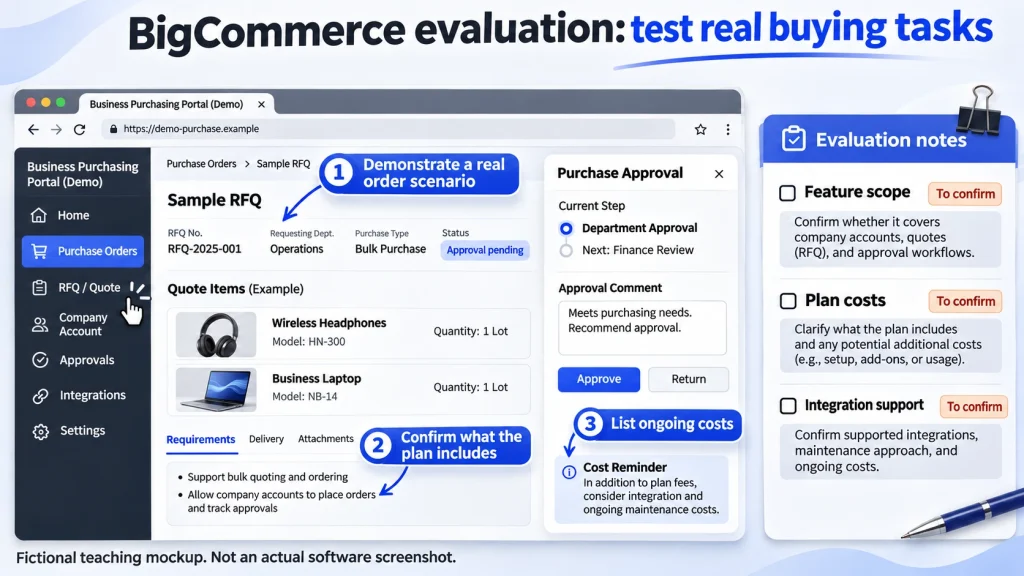
Two suppliers both promise B2B functionality and system integrations, yet their quotations are far apart. Has the cheaper proposal omitted something? Will the demonstration still work after launch? These are practical concerns for the person accountable for selecting a platform.
Bring actual order scenarios, old-site data and essential workflows to the evaluation. A BigCommerce decision needs acceptance criteria, not just a list of feature names.
Test the proposal with a complete purchasing scenario
Prepare tasks such as applying for a company account, requesting a quotation, obtaining approval and reordering. Ask the supplier to demonstrate the sequence instead of touring the menus. BigCommerce’s official B2B information describes relevant capabilities, but the scope available in your proposed solution still needs confirmation.
Our advice is to bring a difficult order, not simply the easiest standard order. A polished demonstration of the normal path does not establish that the solution can handle your exceptions.
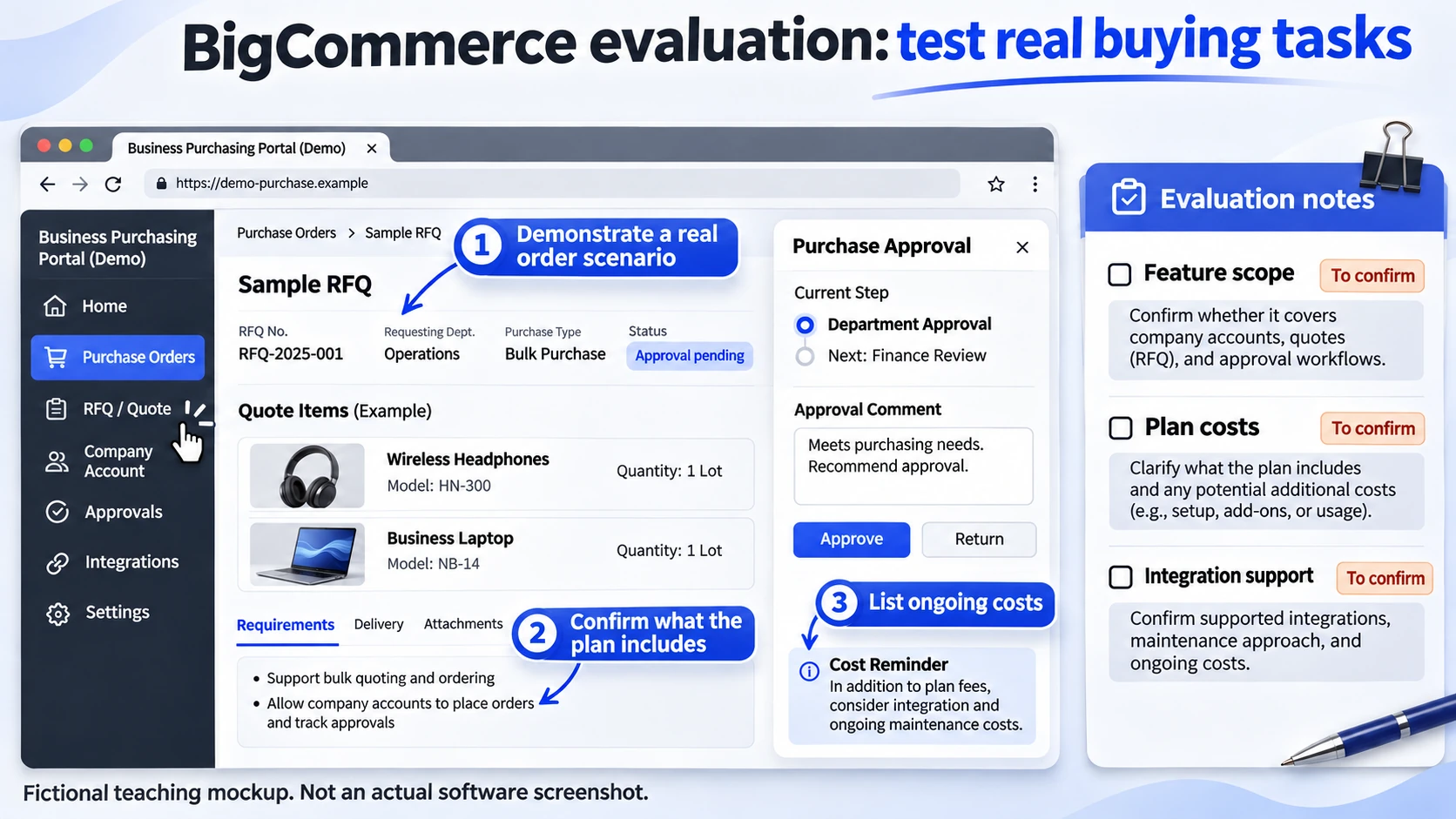
Include the costs that continue after launch
Separate platform subscriptions, themes, apps, development, integration maintenance, data migration, training and future revisions. Ask which costs are one-off, which recur and how out-of-scope work is charged. Compare proposals against the same tasks so that an inexpensive initial quotation does not hide significant ongoing work.
Check data and URLs before migration
Review product identifiers, variants, images, customer fields and historical orders. Define required fields and how invalid records will be handled, then validate a small import. Confirm whether passwords can move or whether customers need reactivation, and prepare an appropriate notification process.
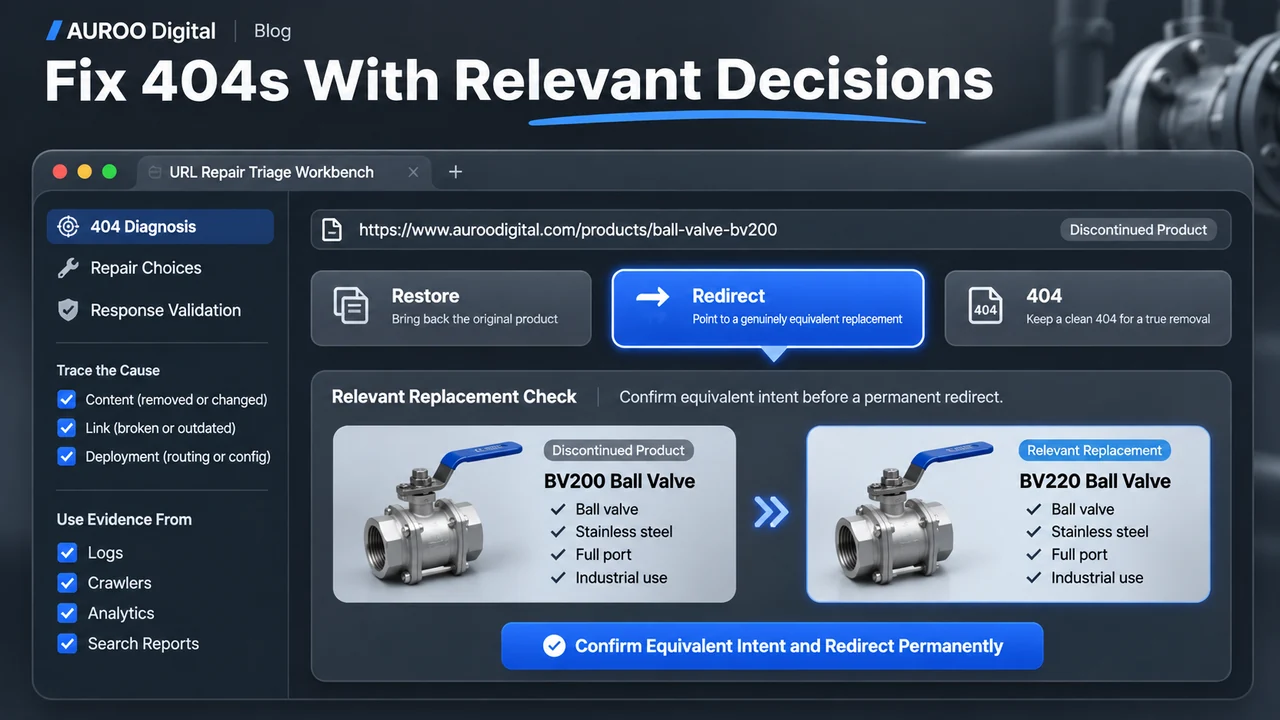
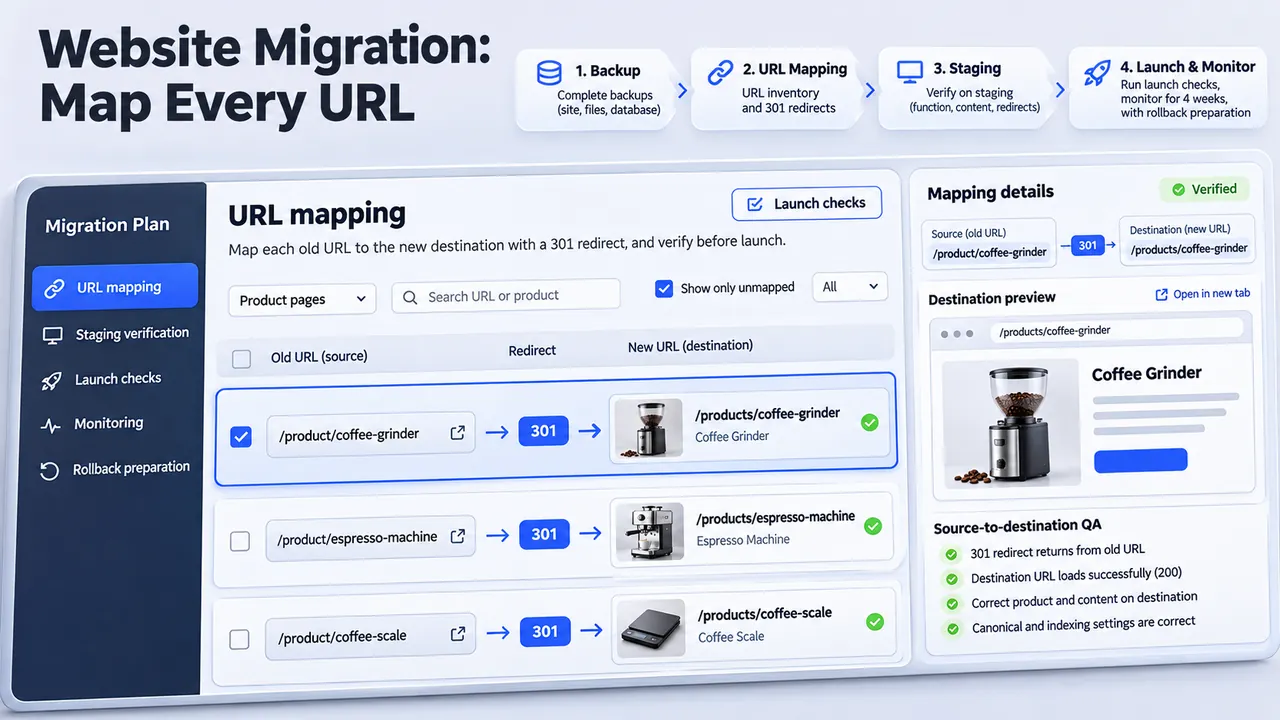
Map important old URLs to relevant new pages. Check redirects and internal links rather than directing every former product page to the homepage. After major changes, monitor page access, indexing and search performance. A new design is incomplete if customers and search engines cannot reach useful existing information.
Agree on acceptance and recovery
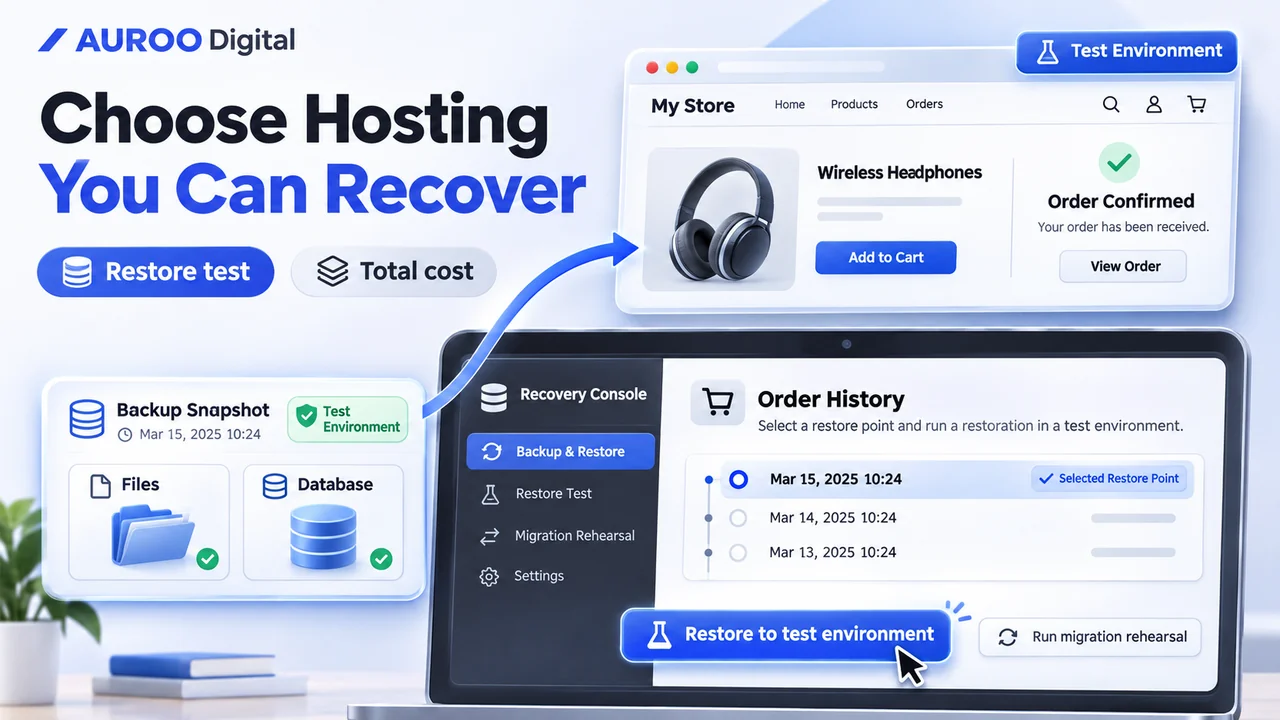
Test mobile use, payments, RFQs, stock updates, tax display and exception handling. Define which faults would delay launch or trigger recovery, and who handles integration and data problems afterward. A homepage design review is not a complete acceptance test.
If your old site suffers from incomplete product information or unclear responsibilities, a new platform will not automatically fix those problems. Resolve them before paying to recreate them in a different system.
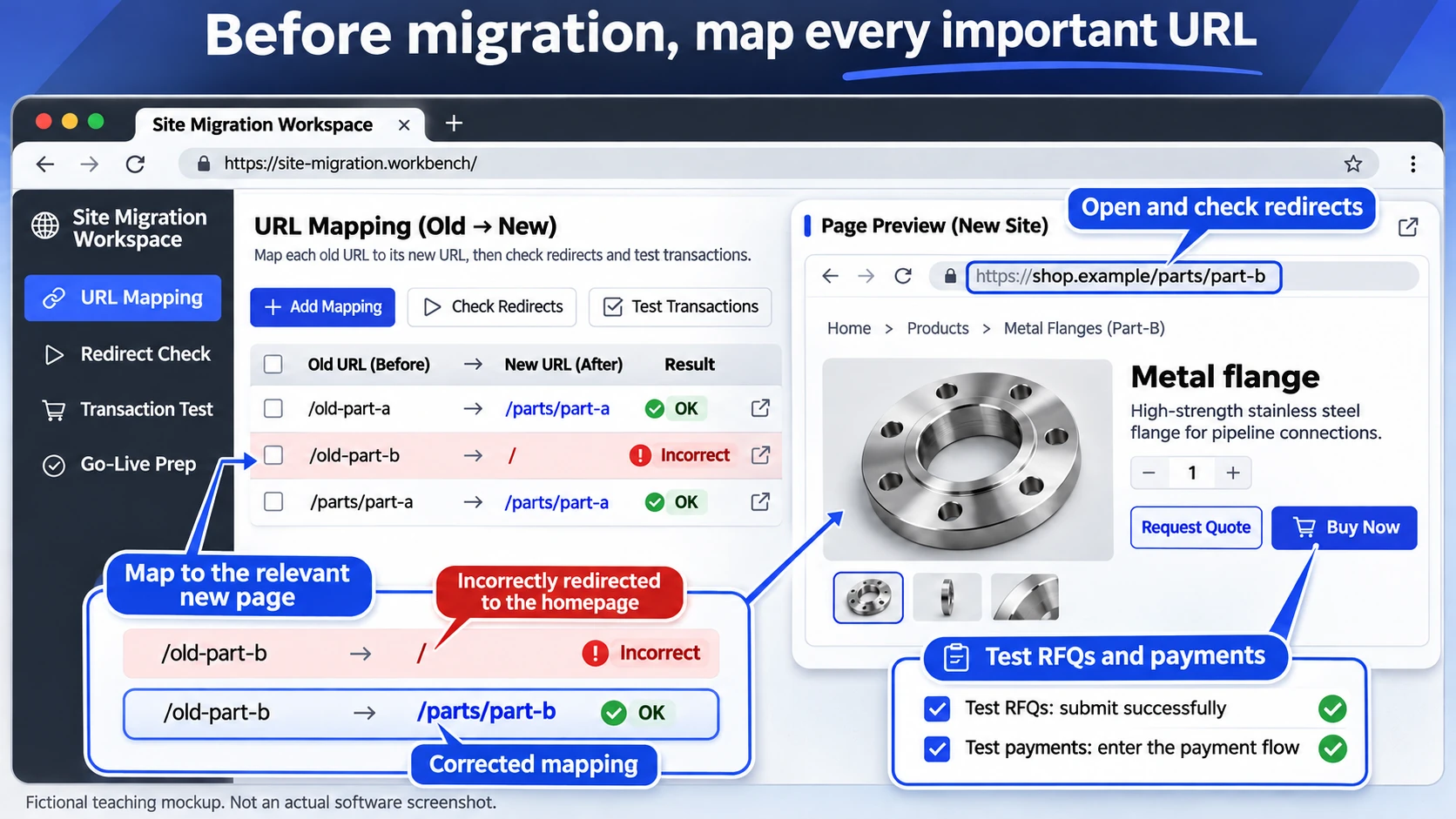
A migration example: preserve relevant destinations
Suppose an old store has 3,000 product URLs. Export the page list, important landing pages and product identifiers, then prepare the matching new destinations. Google’s site-move guidance recommends URL mapping and appropriate redirects. Verify important mappings individually and test transactions after launch.
This is a hypothetical planning example. The migration plan should name the person who fixes mapping errors and explain the recovery process.
Does BigCommerce suit every business?
No platform name settles that question. Assess catalog complexity, procurement, target markets, integrations and budget.
Should design or data come first?
Agree requirements and data structures before finalizing migration and design, reducing rework caused by variants or permission constraints.
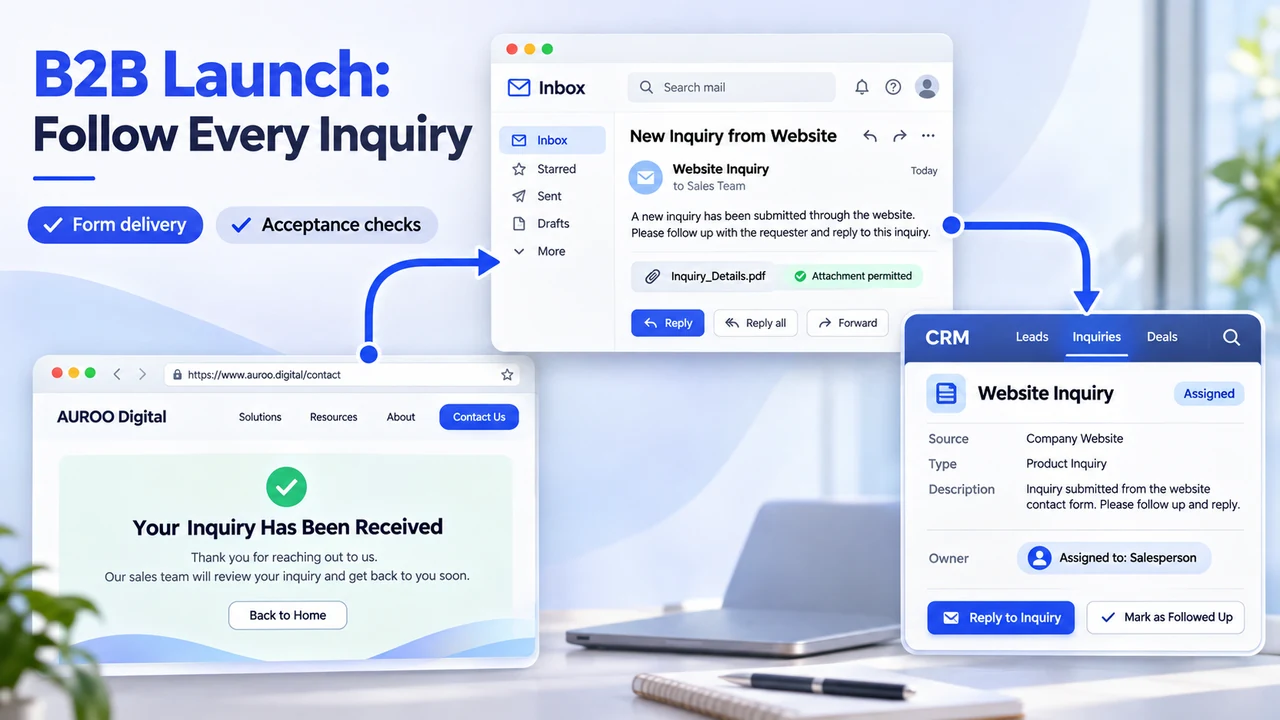
Use actual business tasks to judge suitability. For help planning an ecommerce website, contact AUROO Digital.