GEO
GEO Brand Visibility Optimization: Questions, Facts and Citations
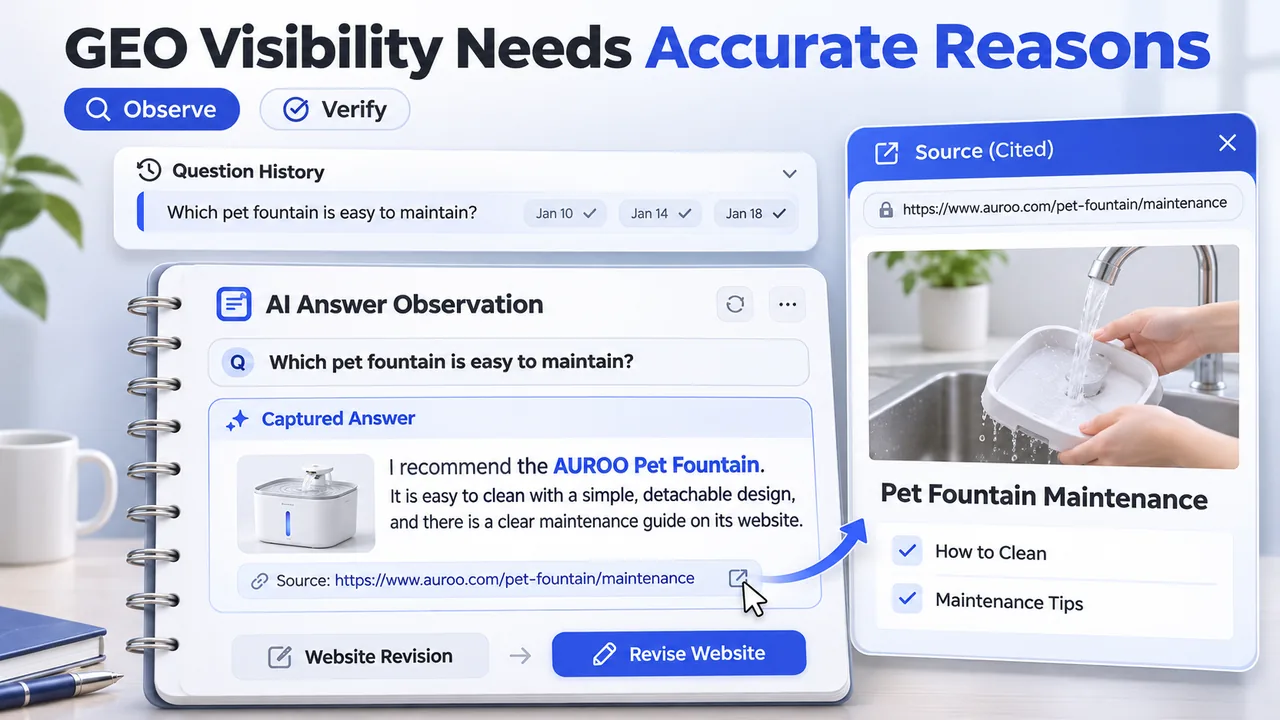
Key takeaways
- Start with real customer questions and define where the brand should be visible.
- Check recommendation reasons, citation sources, and information accuracy together.
- Connect visibility observations to specific page revisions and review continuously.
Start brand visibility optimization with the questions where customers need to understand your business. Check factual accuracy, clear service explanations and evidence for key claims. Record omissions, misrepresentations and competitive differences separately, translating findings into specific page and information updates rather than counting mentions alone.
To apply this approach to your website or marketing project, explore AUROO Digital’s generative engine optimization services, with scope, deliverables and review methods agreed around your needs.
If the user instead tells AI, “I have two cats, am often away during the day, and want easy cleaning,” the result may already be buying advice.
Both approaches address purchasing needs, but the path by which brands enter the user’s consideration has changed.
Generative engine optimization (GEO) concerns how brand content is retrieved, understood, and incorporated into AI answers. Brands previously competed mainly for search impressions and clicks; in generative search, content must also support answer formation.
Users may read advice and form preliminary judgments before deciding whether to visit the official site. A brand may influence them before the website records a visit.
Define the questions under which the brand should appear
GEO brand visibility optimization should begin by identifying needs the brand can address, then examining how AI presents relevant information. Small teams can start with one product category and question set rather than an unassessable goal such as “make every AI recommend the brand.”
For a pet fountain positioned around easy maintenance, prioritize cleaning steps, maintenance conditions, and buying comparisons. The goal is accurate representation for relevant needs, rather than inserting the brand into every pet-related question.
First examine why the brand is recommended
Appearing in AI answers alone does not prove marketing success. A brand may be recommended or mentioned as a negative example. A product name paired with the wrong audience also affects decisions. Counting appearances alone easily erases these differences.
Assess both the user’s question and the recommendation reason. For easy-cleaning products, appearing in relevant usage scenarios matters more than inclusion in a broad brand list. Alignment with actual needs determines whether exposure helps users choose.
For AI buying questions, official website content should give greater attention to applicability. Many product pages emphasize quality, design, and technology without explaining who the product suits, how to maintain it, or when buying is inadvisable. Even prominent content struggles to support useful buying answers without this information.
Explaining usage conditions can be more urgent than adding another brand story.
Begin GEO optimization with genuine customer questions
Choose ten genuine questions from customer service and sales records, preserve original wording, and examine AI answers individually. Focus records on four areas:
- Brands appearing: whether your brand and which competitors are included.
- Recommendation reasons: whether they match usage scenarios and selection criteria.
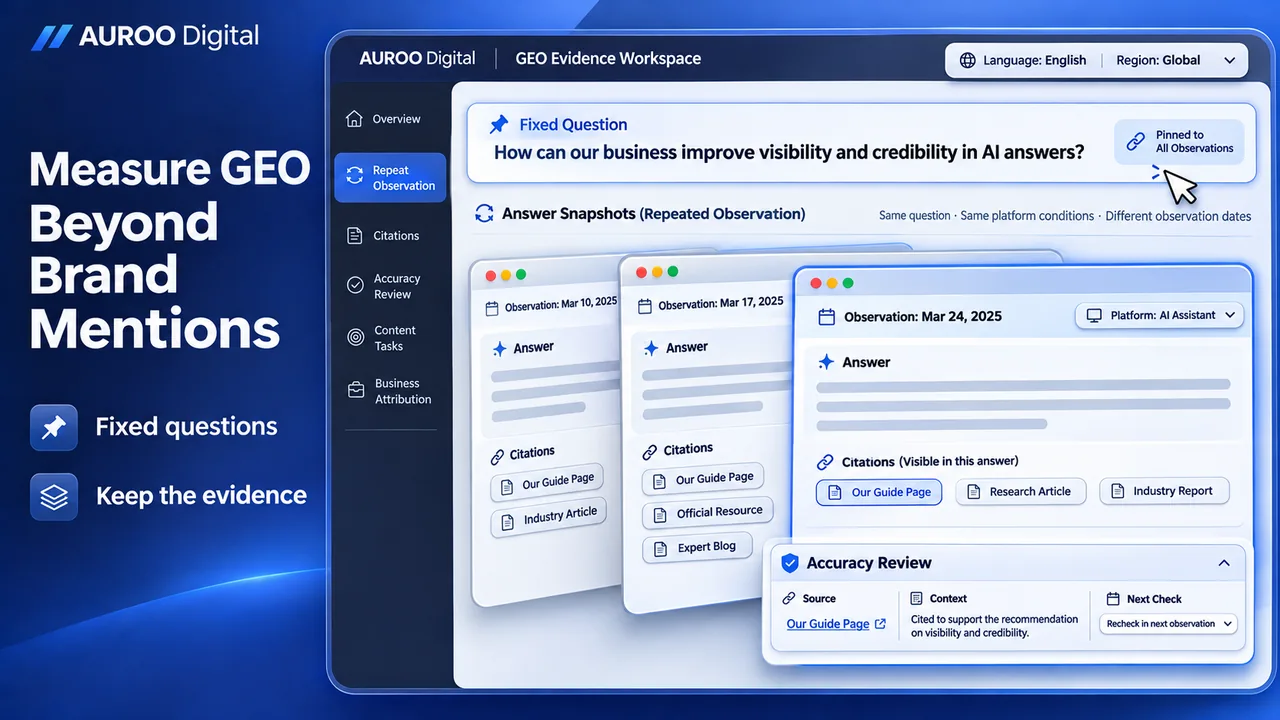
- Citation sources: whether evidence comes from official sites, reviews, or other channels.
- Information accuracy: whether specifications, intended audiences, or service explanations are wrong.
These four record types—brand mentions, recommendation reasons, citation sources, and accuracy—help assess whether AI recommendations match customer needs and expose gaps in public information.
Revise pages around visibility gaps
For gaps found in AI answers, select one directly relevant customer question and complete the brand and model details, applicability, decision basis, and limitations. Place the explanation in the relevant product page or guide and provide clear links from related pages.
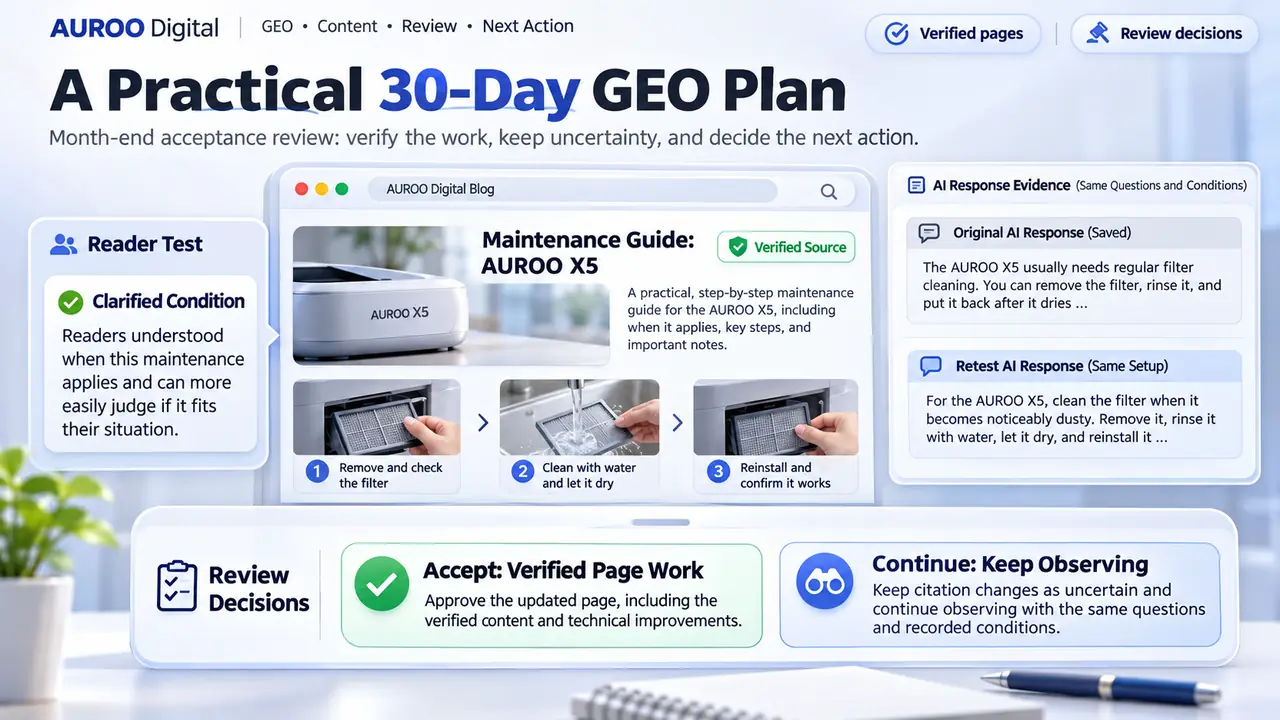
When observing recommendations through customer questions, one answer is only a clue and cannot establish GEO effectiveness. Retest the same questions and record platform, visible model version, date, connectivity, and full answer text.
Turn visibility observations into specific improvements
Suppose a fountain brand is repeatedly recommended to people wanting “less cleaning,” but the product requires regular disassembly and cleaning. First check whether the website emphasizes convenience without maintenance requirements. Correcting expectations is then more urgent than increasing exposure.
- Incorrect recommendation reason: locate cited sources, verify official website facts, and correct vague or outdated maintenance explanations.
- Brand absent: check business relevance, page accessibility, and whether existing content answers the need.
- Accurate recommendations but unsuitable inquiries: check content promises and inquiry entry points for stated usage limitations.
After revision, reuse the original questions to review recommendation reasons and check whether related inquiries still show the same misunderstandings. If errors originate externally, record the source and request correction after verification; official website changes cannot guarantee immediate updates elsewhere or in AI answers.
GEO brand visibility optimization should check relevance, accurate representation, and access to further information together. Each observation should correspond to a verifiable change, with the next review assessing whether it resolved the original information problem.