Ecommerce Growth
Cross-Border Ecommerce Localization: Beyond Website Translation
Your pages are translated and advertising has started, but customers still ask whether the size fits, what the final cost will be, when the order will arrive and where to send a return. Translated words alone do not explain the buying conditions.
Cross-border ecommerce localization covers product information, payment, delivery and support. Follow a local customer’s journey from browsing through receiving the order, checking what they need at each stage.
Before advertising, confirm you can serve the market
Define the country, customer group, product advantages and likely delivery and service costs. Interview prospective customers and test demand on a manageable scale. Market size alone is not a reason to build a full local operation. Confirm that supply, logistics and support can meet the customer’s needs.
Our view is that readiness includes far more than completed translations. A buyer should understand the product, pay successfully, receive what was promised and know how to get help.
Explain dimensions, intended use and compatibility
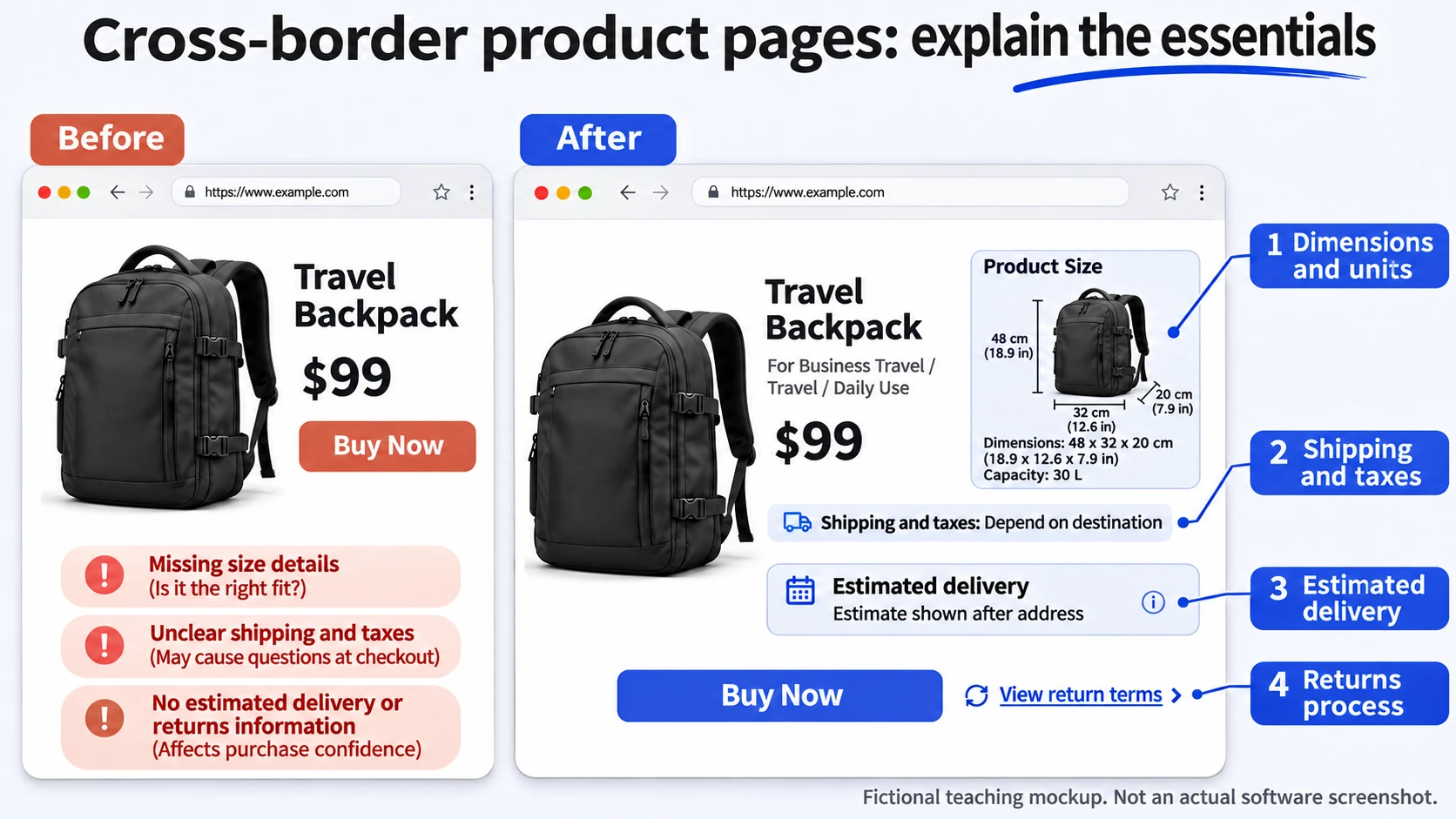
Present measurements in units familiar to the audience and explain relevant models and interfaces. Translation must not change the underlying product specifications. Have terminology checked by someone familiar with the market. Claims about certifications, performance or health effects need applicable evidence; copying another country’s copy is not sufficient.
Explain costs, timing and returns before payment
State delivery coverage, how charges are calculated, estimated timing, return steps and tax responsibilities. Verify product-entry, tax and consumer requirements for the particular market rather than applying one country’s rules everywhere.
Differentiate dispatch estimates from delivery estimates and either from a guarantee. Customers need to know what has actually been confirmed.
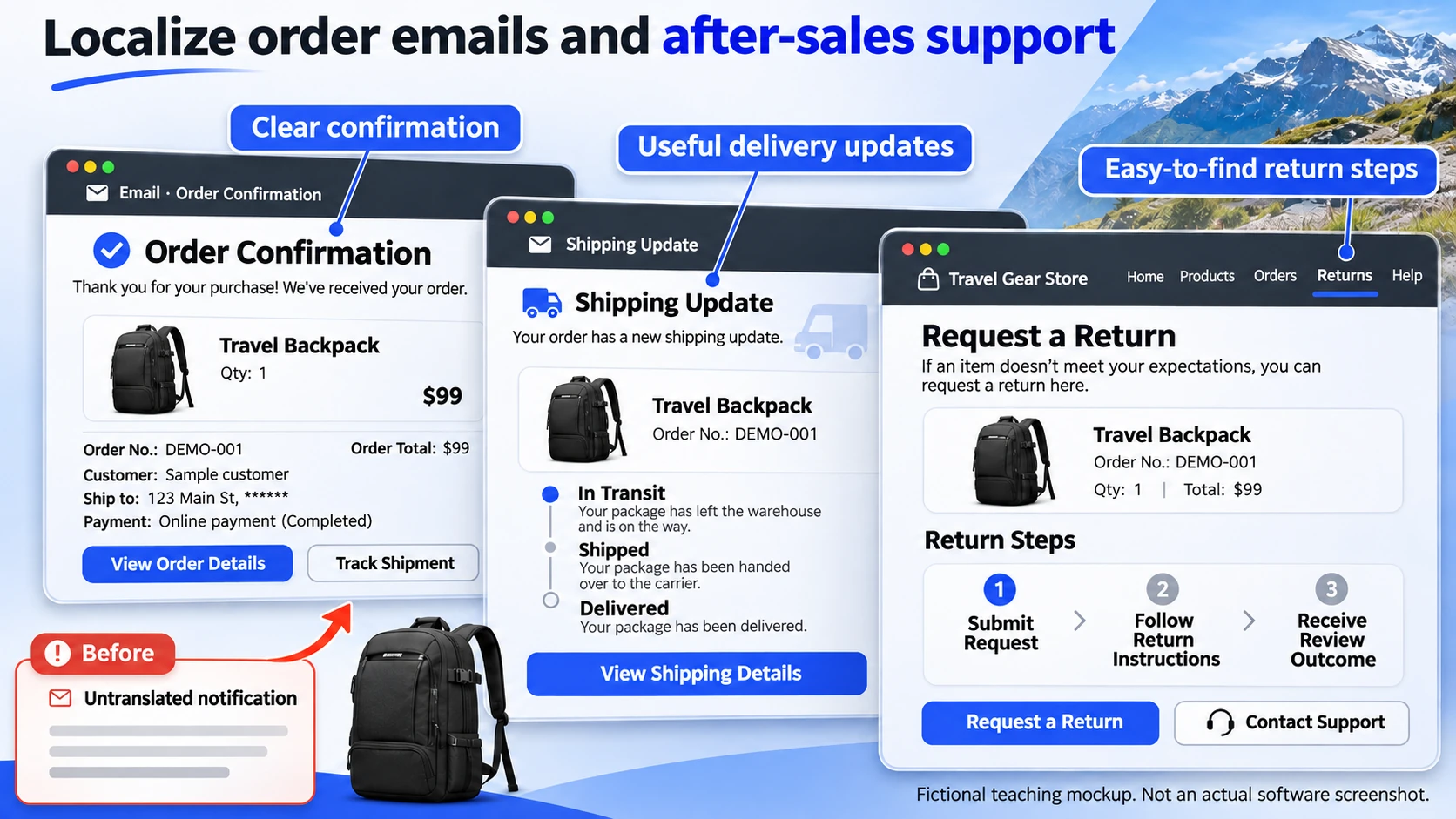
Translate the experience after checkout too
Give language versions stable URLs and a clear language switch. Review navigation, payment buttons, error messages, order emails, tracking notices and return instructions. Someone who understands the product page should not become lost when trying to complete a payment or request help.
Google’s multilingual and multi-regional site guidance recommends separate URLs for language versions and cautions against relying solely on automatic language redirection. Content and website teams should check the journey together.
Check whether the market is commercially sustainable
Review order revenue alongside shipping costs, return losses and support effort for each market. Higher sales do not automatically mean higher profit. Add recurring customer questions to product pages and guides. Google’s helpful content guidance supports answering reader needs, rather than using translation volume as the measure of usefulness.
Three localization mistakes to avoid
- Treating translation as completion. Test currency, units, payment and delivery with a relevant device and destination.
- Copying another market’s policies. Verify the applicable requirements before writing local conditions.
- Advertising in the local language without preparing notifications. Review confirmation, shipping and return messages before launch.
You do not need to enter many countries at once. Establish a working purchase and support process in one market before reproducing it elsewhere.
For a hypothetical pilot, select a small set of reliably deliverable products, clarify dimensions and returns, then test a complete order. Machine translation can support a first draft, while transaction details, restrictions and support conditions need human verification.
To plan a multilingual customer journey, talk to AUROO Digital.