Ecommerce Growth
Holiday Ecommerce Checklist: Test Stock, Checkout and Fulfillment
The promotion is approaching. Images need changes, the email is unfinished and the warehouse wants stock confirmation. Amid the rush, it is easy to overlook whether customers can pay, discounts calculate correctly and promised products can actually ship.
Prioritize holiday ecommerce readiness by transaction impact. Check payment, inventory and fulfillment before adding new promotional features.
Before the campaign: complete three sets of checks
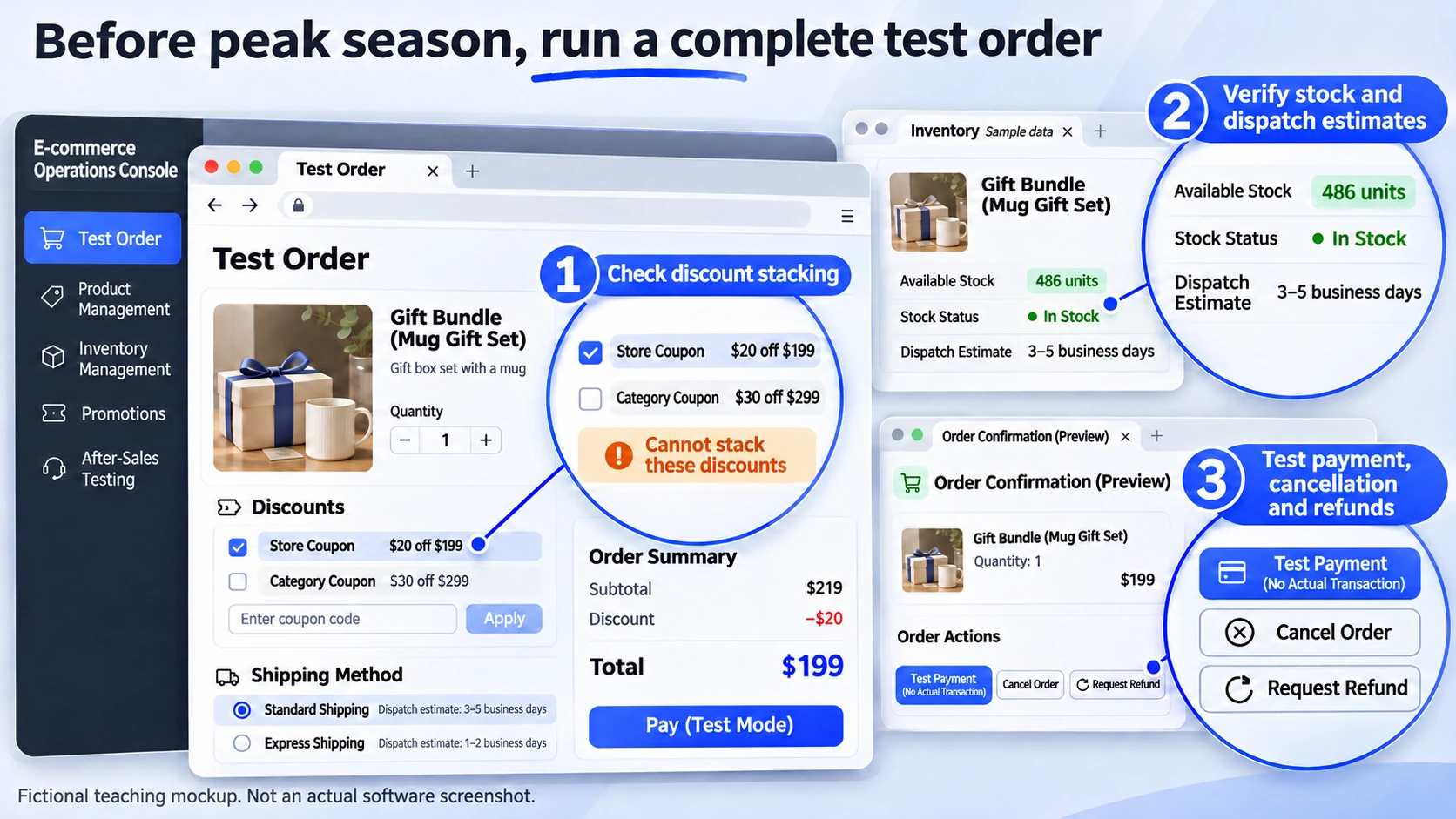
Offer and stock. Confirm eligible products, sellable quantities, discount stacking, exclusions and campaign timing. Advertising, email and website pages should describe the same offer. Clearly explain preorder and unavailable-item arrangements.
Checkout. Test important devices, markets, payment methods and coupon combinations. Cover payment success, failed-payment recovery, cancellation and refunds, checking the back-office record too. A homepage that loads cannot reveal address, currency or coupon errors.
Fulfillment. Confirm capacity with the warehouse and carriers. Update cutoffs, estimates and restrictions on customer pages. Have a process for reducing promotion or advertising when orders approach capacity. Delivery promises should reflect what operations can support.
Pre-launch sign-off
- Sellable stock agrees with the website.
- Discount combinations and exclusions have been tested.
- Payment and refund workflows work in the priority markets.
- Dispatch and delivery information has been checked with operations.
- Incident owners and pause conditions are clear.
During the campaign: know who can act
Assign owners for payment faults, inventory delays, site outages and fulfillment issues. Write down escalation routes and the information customers should receive. Validate major changes beforehand and agree when to restore the previous version.
Support staff need current rules and order status. Conflicting explanations from marketing, support and operations create avoidable confusion.
After the campaign: account for the complete outcome
Review revenue after discounts and refunds, then include fulfillment and additional support costs when assessing contribution by product and channel. Add recurring questions to product pages and guides.
Google’s helpful content guidance supports answering reader needs. For a promotional page, that means useful purchase and fulfillment information, rather than treating the page solely as advertising space.
Three things to check at handover
- Only one cart combination was tested. Prioritize realistic combinations of destination, basket value, customer status and coupon eligibility.
- The ad and checkout describe different offers. Compare ads, email, product pages and final calculations before launch.
- An incident plan has no owner. Confirm contacts, escalation order and who can pause spending.
A busy team also needs to know what can wait. Fixing confirmed transaction problems is usually a better late-stage priority than adding an untested feature.
Our view is that peak-season readiness is measured by whether the business can keep its promises when orders increase. Extra traffic can magnify stock, checkout and dispatch problems.
Example: test a combination of incentives
Suppose the offer combines a threshold discount, a code and free shipping. Test relevant cart values, destinations and account states. If discounts stack unexpectedly, clarify the rules and fix the calculation before widening exposure. Give support a working explanation and an escalation contact.
This is a hypothetical testing plan. If inventory updates lag during the campaign, adjust availability information and advertising rather than continuing to promise more than operations can fulfill.
To prepare your ecommerce purchase journey for a campaign, talk to AUROO Digital.